|
|
|
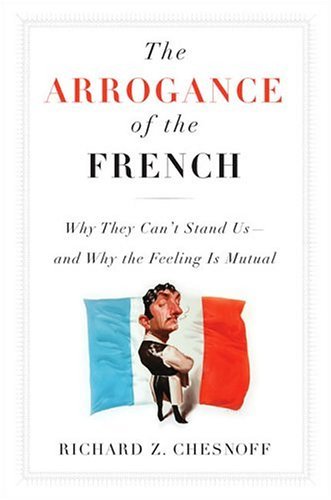
Why do the French hate us? What can we do to improve our relations with our oldest ally? Richard Z. Chesnoff has written an amusing, if simplistic, book addressing these questions. Having spent 20 years in France, he details his first-hand experience with French politics, culture, and attitudes toward the U.S. and foreign affairs. The result is a funny but flawed picture of la belle France from an unabashedly American perspective. The Arrogance of the French is unlikely to change any minds, but it is a timely book about an important question, providing some insights about why the France and America are at loggerheads these days, and what can be done to change the situation. Chesnoff's thesis is that French anti-Americanism stems from envy of the U.S.'s superior political and economic power. Chesnoff includes an entertaining string of anecdotes about the behavior of French individuals (which he describes as "myopic behavior and cantankerous character") that he has experienced while living there; he opines that such rudeness as he has encountered is symptomatic of flaws in the French ways of thinking and acting, which spill over into their political goals. While he does have some legitimate complaints, Chesnoff could use a lesson in manners himself. The fact that the French are not as effusive and friendly as the typical American might be considered an advantage: the typical Frenchman minds his own business and expects his neighbors to do the same. That said, this book makes its point and makes it well. One particularly interesting section is a number of short essays written by French students in answer to the question: What is your opinion of America and the Americans? The responses express a vitriolic hatred of American political actions and culture. Whatever prejudices Americans may have towards the French, it can be safely said that they pale in comparison to those of our transatlantic friends. (Penguin Group Inc., 2005, 187 pps, $23.95) |
 Many Frenchmen are unable to admit that their country's day in the sun has set, and that France is not able even to compete with America on the political scene; even French culture is increasingly permeated with American language, consumer goods and entertainment. Chesnoff proves the truth of this thesis with a stingingly accurate picture of a France that has benefited in numerous ways from American assistance, particularly during the World Wars, yet which remains for the most part ungrateful, in thrall to delusions of superiority.

