|
|||
|
Unguarded Gates: A History of America's Immigration Crisis by Otis L. Graham Jr. is a scholarly, tightly argued book that gives a highly readable overview of immigration issues. It is part of our shared national memory that immigration was historically a good thing - that we are a "nation of immigrants." Graham traces the history of the great wave of immigration that took place between 1820 and the early 1900s, and how that experience led to a much more restrictive policy from the 1920s to the 1960s. But in the mid-1960s, a liberal policymakers urged more "fairness" in the determination of which countries' emigrants should be allowed in. Unfortunately, this momentous change threatens to swamp the country with hard-to-assimilate aliens.
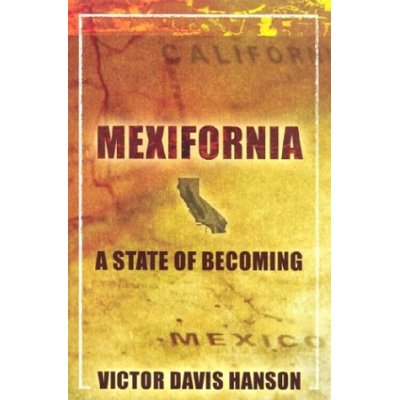
In Mexifornia: A State of Becoming, Victor Davis Hanson, a classics professor and fifth-generation farmer in southern California, takes a close look at Mexican immigration. Hanson not only is a perceptive scholar, but has daily interaction with immigrants as neighbors, employees, relatives, friends and vagrants. Hanson is ambivalent about immigration from Mexico. But he also has first-hand experience with the dark side. He sees how the children of immigrants often lack their parents' work ethic, and have their own ambitions sapped by multiculturalist propaganda propounded by elites who feel guilty about American prosperity. Simultaneously seeing themselves as victims and sentimentalizing "the old country," they do not feel the need to assimilate as their parents did - with California being so rapidly mexicanized, why bother? Hanson provides interesting observations of how current forces have changed and damaged the Mexican family unit. Often women, more adept at language and more adaptable to office jobs, are more successful than men. This disparity can serve to irritate Mexican males who begin to see themselves as overworked pack mules in the land of the rich. He is richer than his compatriots back home, but he will always feel poor in America. Hanson does a good job explaining why Mexican immigration is different from past immigration. Instead of being a one-time occurrence, this wave is continuous. The border is porous, so it is easy to stay in communication with the old country, which again discourages assimilation. The Mexican government is also to blame, for it uses the United States as a safety valve to enable it to avoid instituting needed reforms. These books are must reading for anyone interested in immigration's effect on the future of our country. (Unguarded Gates, Rowman and Littlefield, 2003, 204 pps, $26.95) (Mexifornia: A State of Becoming, Encounter Books, 2003, 150 pps, $21.95) |
 But Graham, Professor of History Emeritus at the University of California Santa Barbara believes that current immigration policies are taking the country where it doesn't want to go: toward uncontrolled borders, competition from foreigners for American jobs, and unhealthy population growth.
 He clearly understands the benefits that immigration brings in the form of cheap labor that leads to inexpensive consumer goods and services. He respects the work ethic of first-generation.

