|
|
|
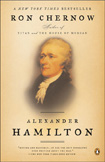
If you are looking for a thorough and perceptive biography of the man who was called "the American Mephistopheles" by his enemies, then Ron Chernow's examination of Alexander Hamilton's life and work is indispensable. His book is a pleasure to read and should be informative for both the Revolutionary War aficionado and the layman. Chernow argues convincingly that of all the larger-than-life figures of the period, no one person influenced America's path more than Hamilton: Indeed, it was Hamilton who, more than anyone else of comparable stature, helped establish the peculiarly American idea that one's origins are not nearly as important as one's talents and actions. Having escaped the stigma of illegitimacy and an impoverished childhood in the West Indies, he distinguished himself in the Revolutionary War as Washington's right-hand man. Hamilton played an important role in drafting the Constitution and defended it brilliantly, both in his Federalist Papers and his economic policies under Washington. Hamilton left to America a strong federal government, a vastly improved economy, and the beginnings of a powerful military force. Although often accused by his opponents of supporting the rich and aristocratic, Hamilton's policies helped make the U.S. a meritocracy. Hamilton's two greatest political enemies, Jefferson and Madison, both came from wealthy, elite families and never managed to wholly repudiate slavery, whereas Hamilton supported abolition during his entire adult life. Like many politicians, Hamilton proved to be his own undoing. His excessive need to "defend his honor" led him to challenge his accusers to duels on several occasions, which ultimately led to his fatal encounter with Aaron Burr at age 49. Chernow's biography depicts a brilliant but flawed man who stands out even among the luminaries of his time. Perhaps more than any of the other Founding Fathers, Hamilton appears to us "in two guises: as both sublime and ordinary, selfless and selfish, heroic and humdrum." In the final analysis, his character and achievements tip the scale towards the former guise, to which the unfailing love and devotion of his wife and children attest. Talleyrand, the French ambassador to America during the 1790s, considered Hamilton the greatest political figure of his age, and, after reading this monumental work, one might well agree with him. (Penguin Press, 2004, 818 pps, $18) |
 "Hamilton had promoted a forward-looking agenda for a modern nation-state with a market economy and an affirmative view of central government…Elitist [the Federalists] might be, but they were an open, fluid elite, based on merit and money, not on birth and breeding…it was the northern economic system that embodied the mix of democracy and capitalism that was to constitute the essence of America in the long run."

