|
|
|
Did you know that since 1900 the Earth has warmed by less than 1 degree Fahrenheit? This and other little-known facts make up the contents of Jack W. Dini’s hard-hitting exposé. In a series of pithy, layman-friendly chapters, the former chemical engineer and president of the American Electroplaters and Surface Furnishers Society takes on pollution, species extinction, Consider the case of DDT, the infamous pesticide that was developed to control mosquito populations and was banned in most countries after Rachel Carson’s book Silent Spring labeled it a carcinogen and a killer of birds and fish. According to Dini, the banning of DDT was "one of the most horrific acts in history," resulting in millions of preventable deaths in Third World countries due to mosquito-borne malaria. Furthermore, recent studies have shown that, contrary to activists’ claims, DDT is not dangerous to either humans or the wildlife in question. This fact has been amusingly demonstrated by Dr. J. Gordon Edwards, professor of biology at San Jose University, who for many years would publicly swallow a spoonful of DDT powder before each of his lectures on the chemical. The media fail to tell the whole truth about environmental affairs for a very simple reason: Bad news sells better than good news. Journalists know that people are more likely to read an article entitled "Studies Show Possible Link Between Leukemia and Exposure to Electromagnetic Fields" than one entitled "Studies Are Inconclusive As To Whether Leukemia Is Correlated with Exposure to Electromagnetic Fields." The media are also prey to activists who often have little scientific knowledge. One of Dini’s anecdotes concerns a lobbyist who, to prove this very point, tracked down a number of people who had publicly expressed support for a ban on pesticides. He then sent each of them a letter from a fabricated organization warning of the dangers of "dihydrogen oxide," a chemical that was responsible for 4,100 deaths in a recent year. He received scores of letters that inveighed against the "evil producers" of this chemical. These letters proved that the activists who sent them lacked even rudimentary knowledge of chemistry: dihydrogen oxide is H2O, or water. This book makes the case that the media and many activists are overstating those problems and proposing solutions that would exacerbate other, more pressing troubles, such as poverty and disease. It is time to reevaluate the needs of the environment and achieve a better balance between them and the needs of society. (Scitech Publishing, 2004, 207 pages, $24.95) |
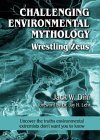 global warming and every other supposed threat that environmental alarmists have trumpeted for decades. His numerous quotations of scientific studies demonstrate that the public debate on environmental policy is sadly misinformed and one-sided.

