|
|
|
Affirmative action is, without a doubt, one of the most incendiary issues of our time. As is often the case with such public policy disputes, much heated wrangling takes place in classrooms and seminars over who is "right" and who is "wrong." Thomas Sowell takes a different approach. In Affirmative Action Around the World he focuses not on the philosophical arguments about affirmative action, but on the practical consequences of affirmative action in the real world. Those practical consequences have been disastrous. In country after country, policies designed to "level the playing field" among disparate groups have led to bitter ethnic rivalries, chaos, violence and death. Like communism, the pure idea of affirmative action as philosophically expounded is granted such moral authority that it manages to shimmer and float high above the tragedy it causes below. Sri Lanka may be the most horrifying example. Colonized by Europeans over a 400-year period, the island has a native population consisting of the majority Sinhalese and a much smaller Tamil minority. Due to accidents of history, the Tamils received better education from colonial powers. In addition, the fact that they tended to occupy the part of the island on which making a living was more of a struggle made them better economic competitors. All this resulted in their dominating the professions and amassing much of the island's wealth. Even so, the two groups essentially lived in peaceful coexistence until after independence in 1948. Solomon Bandaranaike, a rising politician with his eye on the Prime Minister's post, saw an issue he could exploit for political gain. His government passed law after law to force "equal access" to education and jobs. Tamil schools were taken over by the government, and the Sinhalese language was mandated in law and business transactions. Predictably, tensions grew, ultimately leading to a civil war in which 65,000 people lost their lives and countless thousands were forced to flee the country. Similar disasters took place in Nigeria, India and Malaysia. In all cases, politicians seized on variations in the status of different ethnic groups and used those variations as a way to fan ethnic flames. The problem with this approach is that status differences can have many causes, such as generations of better education or different cultural traditions. Passing laws and establishing quotas do not change these realities. As we know only too well, the United States is not immune from the same political virus. Sowell shows that similar policies in our own country have led to minorities being placed in schools for which they are simply not qualified, leading to angry disappointment on the part of those granted access, and resentment by those whose places were taken. A new study in the Stanford Law Review bears this out, concluding that ending affirmative action in ABA-accredited law schools would actually increase the number of African-American lawyers. "Facts are stubborn things," as Sowell approvingly quotes John Adams. It is Sowell's signal contribution to focus his cold eye upon them, and not to be fooled by platitudes that will not change them. (Yale University Press, 2004, 198 pages, $28) |
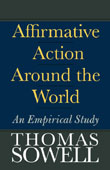 Sowell takes the reader on an eye-opening tour to India, Sri Lanka (formerly Ceylon), Nigeria, Malaysia and the United States.

