|
|
|
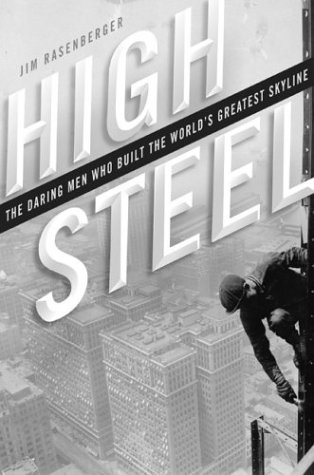
Perhaps nothing is so characteristically American as the proud, jutting skyscrapers that make up the skyline of all major cities. The story of these man-made miracles is an extraordinary one, and it is told with gusto by Jim Rasenberger in High Steel: The Daring Men Who Built the Ironworkers are a special breed. Many are descended from Mohawk Indians and Newfoundlanders, both of whom show an affinity for doing jobs that require great strength and agility at very high altitudes. Rasenberger gives the reader an illuminating account of the architecture and engineering behind the bridges and buildings, but the most interesting parts of the book are those that deal with the colorful "cowboys of the skies" who made raising the beams their life's calling. One such interesting character was Sam Parks, the famous labor organizer who ruled the New York area in the late 1800s. By force of personality and ruthlessness, he singlehandedly increased the power of the ironworkers union by many orders of magnitude. Unfortunately, a big part of his legacy was the poisoning of labor relations in New York for decades. Union violence spread west in the early 1900s, punctuated by the celebrated case of Ortie McManigal and James McNamara, who blew up several buildings in Los Angeles, killing scores of people. They were convicted, but their defender, liberal icon Clarence Darrow (of Scopes trial fame), was indicted for attempting to bribe a witness. Despite chronic arguments with their employers and the very real risk of death or serious injury, the many ordinary ironworkers to whom the reader is introduced seem to genuinely love their dangerous work. It pays well, but the chief sources of satisfaction are the comradeship and pride the men feel as they work in tightly knit teams to raise their buildings ever higher. Harrowing accounts are given of famous accidents, like the collapse of the Quebec Bridge in 1885, when 75 workers plunged to their deaths in the icy waters below. The accident destroyed the reputation of a world-renowned engineer, Theodore Cooper, whose calculations proved incorrect and resulted in too little bracing being used. Steelworkers know how to take beams apart as well as assemble them, and this skill was put to good use in the days after September 11, 2001, when the wreckage had to be cleared from the World Trade Center site. The reader will be struck with the can-do patriotism of the workers as they doggedly carried out their duties. Rasenberger includes many stunning photographs of men working fearlessly at great heights, seemingly indifferent to the danger lurking just inches away. A pleasing mix of written and oral history, social commentary and engineering, this book is a must for anyone who has ever marveled at the beauty of a bridge or skyscraper. (Harper Collins, 2004, 339 pages, $26.95) |
 No one really knows why these individuals seem to thrive on high steelwork; maybe it's in the genes, or maybe it's just because the original skyscrapers were built in the Northeast where these people lived.

