|
|
|
Although World War II ended nearly sixty years ago, the images of Adolph Hitler and his genocidal National Socialism are burned into our collective consciousness. In contrast, the evils committed by an even more murderous Communist regime largely constructed by Joseph Stalin, which finally collapsed a decade ago, barely register. What is the reason for this disparity? John Earl Haynes and Harvey Klehr tackle this question in their new book In Denial: Historians, Communism & Espionage. Haynes and Klehr are well qualified for this work. Together, they have written 14 books on anti-Communism, including the definitive work on the Venona Secrets, which showed the true depth of communist infiltration into the American government. These two do not pull punches. In the years following World War II, the American history establishment became a sort of shrine where the Communist faithful could gather. Eric Foner, professor of history at Columbia University and a past president of the American Historical Society, was typical. After spending a career defending the century's greatest mass murderer, Stalin, he railed against Latvia, Estonia, Lithuania and Georgia for asserting their independence, thundering that they should be treated like the South when it tried to secede from the U.S. Gerda Lerner, professor of history at the University of Wisconsin and an ardent admirer of Stalin who grew up under Nazi rule, once actually stated that life in the United States resembled life under Hitler in many ways. ("It was not dissimilar to the state of existence I had experienced in Vienna after the Anschluss.") Foner and Lerner are all too typical of a history establishment that devoted many hours to buffing the image of the Communist Party of the United States as a benevolent force for social change. As the authors show, the CPUSA was in fact run by a small group of full-time bureaucrats vetted, approved, paid and often chosen by Moscow. The American historical establishment has consistently taken a "blame America first" attitude toward the Cold War, and has been busy constructing an alternative history of the glorious state we would now be in, had it not been for the anti-communist crusades of the 1950s. The authors also definitively rebut the fairy tales about the "innocence" of the Rosenbergs, Alger Hiss, Harry Dexter White and others who have been darlings of the history establishment. This is an informative book for students and their tuition-paying parents who need to penetrate the fog of academic rhetoric to understand the true depth of the historical threat of Communism to America. (Encounter Books, 2003, 233 pages, $25.95) |
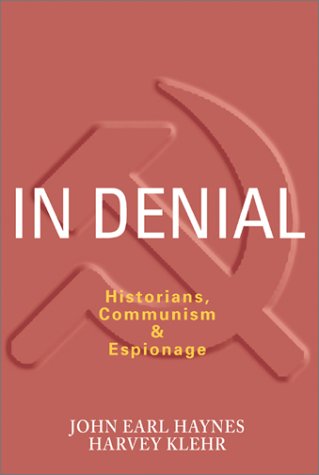 While the story they tell has some dry spots, as they detail the exploits of long-forgotten figures of the 1940s and 1950s, the message of the book is very au courant: the purposeful distortion of history by a generation of American historians.

