|
|
|
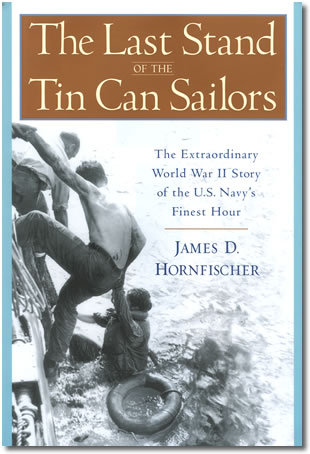
"This will be a fight against overwhelming odds from which survival cannot be expected. We will do what damage we can." With this terse speech, given on October 23, 1944, Lt. Cmdr. Robert W. Copeland of the destroyer escort USS Samuel B. Roberts gave the battle order for one of the most extraordinary mornings in the history of the United States Navy. James D. Hornfischer more than does justice to the young sailors who followed their commanders into battle in The Last Stand of the Tin Can Sailors. The odds were all but hopeless. A U.S. Navy task force consisting of seven light aircraft carriers ("jeeps") protected by seven destroyer escorts and three destroyers ("tin cans") faced an overwhelming Japanese flotilla of four battleships, seven destroyers and five heavy cruisers. Each Japanese battleship sported four 18-inch batteries, the largest muzzles of any naval guns in the world. Each gun turret weighed more than one of the U.S. destroyers. Each battleship outweighed the entire American flotilla. Led by their indomitable commander, Ernest E. Evans, a fearless, barrel-chested naval warrior of Cherokee descent, the little U.S. flotilla drove right to the heart of the Japanese armada. Hopelessly outgunned, the American ships braved enemy fire to get close enough to use their shorter-range five-inch guns and torpedoes. Amazingly, many got through and did considerable damage. Planes had to be hurriedly launched from the carriers before the Japanese could sink them. Pilots launched bomb and torpedo attacks, and flew directly into antiaircraft fire to strafe the battleships. Incredibly, by the end of the morning, the Japanese fleet that was ten times the size of its little foe was in retreat, and headed for ultimate destruction by larger American forces. The book is full of memorable vignettes, like one about a young pilot unable to return to his carrier because it was under heavy attack. He found a nearby island occupied by the Americans as a supply depot, and landed there to rearm. The commanding major refused, saying that his supplies were meant for other planes scheduled to arrive in a week or so. Undeterred, the flier pulled out his pistol and quickly convinced the commander of the seriousness of his plight. Soon a makeshift airfield was receiving more planes and sending them back into battle. Descriptions of the battle are so vivid that the reader can almost hear the screaming shells tearing into the steel fortresses. One cannot help but be moved by the bravery, resourcefulness and fragility of the men who manned the ships, and then braved a sea full of blood and sharks when those ships went down. Anyone with an interest in naval warfare will find this book very hard to put down. (Bantam Books, 2004, 427 pages, $24.95) |
 This historic naval clash was part of the larger Battle of Leyte Gulf, which marked the beginning of the liberation of the Philippines. The U.S. task force had been given the job of protecting the northeastern flank of the Philippines from Japanese attack. But poor intelligence, chance and crafty Japanese maneuvering set up a mismatch that threatened the American plan to retake those vital islands in the push to the Japanese homeland.

