|
|
|
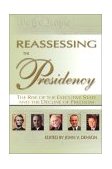
Considering the vast literature covering the presidency of the United States, is there room for yet another volume? The Mises Institute has decided there is, and the result is Reassessing the Presidency: The Rise of the Executive State and the Decline of Freedom. This hefty book features 22 essays by prominent historians and economists who assess the effects of presidents and their policies on the state of freedom in the United States. The focus is on the concentration and exercise of power by the chief executive. Richard Vedder and Lowell Gallaway construct their own ranking of presidents, on the basis of how much centralized federal power grew during various administrations. The authors' assessments differ markedly from those of most professional historians, who tend to approve of the expansion of government, Marshall deRosa contributes an interesting essay showing how the Supreme Court has been an accomplice of the growth of federal control, particularly during the administration of Franklin Roosevelt. He also details the Court's attack on states' rights in the country's early years, and shows how it weakened checks and balances created by the Framers. He further argues that the weakening of the Electoral College, particularly under Andrew Jackson, has led to a decline in the quality of presidents, particularly in the last one hundred years. One of the most interesting essays in the book concerns Martin van Buren, whom author Jeffrey Hummel considers perhaps the greatest president in terms of making the preservation of individual liberty the touchstone of his domestic and foreign policy. While some presidents may have been greater men, none was more restrained and judicious in exercising his power. Perhaps the most interesting chapter is by Ralph Raico on Harry Truman. The dapper haberdasher is often listed by historians as one of the "near great" presidents: after mulling over Raico's article, one will wonder why. Truman was universally reviled when he left office in 1953, and his most cherished schemes, like universal military training and socialized medicine, were rejected by Congress. Truman's Korean adventure greatly expanded the possibilities for presidents to wage wars on their own account. His solution for the railroad workers' strike in 1946 was to draft the strikers into the army! Those power grabs extended the reach of the presidency far beyond what even Franklin Roosevelt had imagined. While many of the conclusions reached in this fascinating volume are controversial, no reader will come away without new insights and perspectives on the accomplishments of our chief executives. Some heroes won't look quite so heroic, and lesser known names will take on a new interest. Most importantly, the reader will be forced to grapple with what greatness is, and whether having a "great man" for president is necessarily good for the country and its traditions of liberty. (Ludwig Von Mises Institute, 2001, 826 pages, $35) |
 and therefore rate presidents like Franklin Roosevelt and Lincoln highly.

