|
|
|
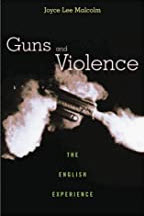
The case for private ownership of guns in America has become much stronger in recent years, thanks in large part to the path-breaking work of economist John Lott. Now, British analyst Joyce Lee Malcolm has weighed in with the evidence from England. Supporters of the right of Americans to own guns will certainly feel vindicated by her new book, Guns and Violence. By the 1550s, gun ownership had become common in England. But despite the great political turbulence of the next 150 years, the actual rate of homicide declined sharply, In the 1700s English legislators created a tremendous number of capital crimes aimed at preserving public order. By parsing the evidence, Malcolm shows it is unlikely that the increased incidence of gun ownership caused an increase in violence. The law only strengthened the right of Englishmen to defend themselves with their own firearms. Violence plummeted in the 19th century. In 1890, only three people in all of England and Wales were sentenced to death for homicide with a firearm. The number rose to four in 1891, but fell back to three in 1892. This decline occurred even as guns were denied to the new bobbies who patrolled England's cities. Malcolm concludes that the strong tradition of private gun ownership was responsible for maintaining the peace. Driven by fears of working-class violence in the first half of the 20th century, the government gradually took control of gun ownership. The great gamble was that criminals would be convinced they need not have guns, since the police and private citizens did not. This turned out to be a very bad bet. From the middle of the 20th century to the present, violence in England has increased exponentially. Malcolm details the relentless rise of crime and presents case after case where unarmed citizens have been victimized, first by criminals, and then by the state for trying to defend themselves. The sorry pass to which England has come is illustrated by the story of a 55-year-old farmer who had suffered numerous break-ins at his farmhouse. When burglars broke in one night, he slipped downstairs with his unregistered shotgun and opened fire, killing one and wounding the other. For this act of self-defense, he was sentenced to life in prison.Public outcry eventually caused the sentence to be reduced to five years, but only because the court ruled that the farmer exhibited "diminished capacity" from abuse suffered as a child. Another milestone for the therapeutic state. Malcolm finishes with a summary of the corroborating data from America, and leaves no doubt that, on balance, private ownership of guns is a great bulwark against the criminal, not a threat to the honest citizen. English society is undergoing a catastrophic breakdown. If the government is unwilling to defend its citizens and the citizens cannot defend themselves, who but the criminal will rule Britain? (Harvard University Press 2002, 255 pages) |
 just as English law was proclaiming the importance of the individual's right to defend himself and thereby to defend the public at large.

