|
|
|
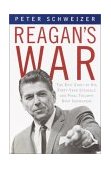
Winning the Cold War was the work of many people over many years. But if one person above all others had to be singled out, who would it be? In Reagan’s War, Peter Schweizer of the Hoover Institution makes a compelling case for Ronald Reagan. Reading Schweizer’s extensive quotes from newly opened archives in eastern Europe, and from Reagan’s own KGB file, one is hard put to disagree. Reagan’s anti-Communism was a consistent theme from the time he helped root communists out of the Screen Actors Guild in the 1940s to the collapse of the eastern European satellites in the early 1990s. As early as the 1940s, Reagan had formulated his core belief that the Soviet system could not match the United States if the battle came down to a technological race between free men and serfs. This was the foundation of his optimistic view that freedom would eventually triumph over tyranny. Reagan watched with increasing dismay as the Soviets relentlessly built up their military machine while Presidents Eisenhower, Kennedy and Johnson stood by. President Nixon fell under the spell of Henry Kissinger, who held a fundamentally pessimistic view about America’s future. Kissinger’s influence led to Nixon’s policy of "détente," French for "help the enemy build up his army with loans and grain exports." Things went from bad to worse under President Carter, and the Soviets delighted in an adversary who placed human rights violations (except those that occurred in the Soviet Union) above all other interests. Soon the Soviets were active in Africa and Central America. Secretary of State Cyrus Vance, a pacifist, practically cheered the Soviets on. Meanwhile, Ambassador Andrew Young spent his time at the United Nations berating America and Britain. President Reagan changed all that. He took the fight to the Soviets, giving speeches that left nuclear-freezenik liberals gasping for breath. He braved pacifist demonstrations in Europe to strengthen ties with the labor movement in Poland and with the Pope. He breathed new life into the Voice of America radio program so that the message of freedom could keep seeping through the Iron Curtain. More tangible results were seen in military actions in Grenada and Nicaragua, and perhaps most of all in the "Soviet Vietnam" Afghanistan. American-supplied Stinger missiles became the trademark weapon of the insurgents taking on Goliath and winning. At every turn, Reagan articulated his philosophy of freedom, going into the belly of the beast in Berlin to exhort Mikhail Gorbachev to "tear down this wall." In Iceland, overruling all his advisors, he stubbornly refused to give up his crown jewel, the Strategic Defense Initiative. History proved the "C" student from Eureka College right and the intellectuals wrong. This disarming man combined fortitude, a strong moral sense, and, for a politician, a curious disregard for transient public opinion. From these simple ingredients Reagan forged victory in the Cold War. (Doubleday, 2002, 285 pages, $26) |
 While others dithered, Reagan remained absolutely committed to his long-term goal of winning the Cold War, not merely surviving it.

