|
|
|
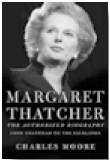
"A scientist, barrister, and mother of two." Margaret Roberts Thatcher's self-description in an early political campaign speaks to her frankness. Her willingness to first run for office in a borough where she was likely to face defeat illustrates her courage. "Margaret was charming, but exhibited a will of steel," said one early observer. The research chemist, who worked in the then new field of "plastics" before studying law, Readers of Margaret Thatcher may be familiar with the leader who exhibited a "temperamental aversion to retreat and compromise," and who was fueled by adversity. Charles Moore presents a woman who also had teen crushes, loved to dance, and was as witty as she was formidable. In her earliest cabinet position, Thatcher found herself at the center of a humiliating controversy over free school milk. After that she learned to better control her public image. A CIA report prepared for President Jimmy Carter in 1979 declared that "the 'special relationship' between the United States and the United Kingdom, finally, has lost much of its meaning." What Prime Minister Thatcher and President Ronald Reagan did to resurrect that relationship has impacted history in multitudinous ways, and remains a relevant accomplishment. The relationship between Mrs. Thatcher and Ronald Reagan began years before he was elected President. They enjoyed a rapport and an aligned world outlook. Joining together to defeat the Soviet Union, they shared a common belief that "collectivism threatened both freedom and economic success." During their first meeting as President and Prime Minister, the newly elected Reagan honed his political strategy by identifying and then avoiding the tactics that had so far failed to give Thatcher results. He achieved their identical objectives of "reducing the public sector while increasing the private sector, cutting government spending, cutting taxes, and reducing inflation by reducing monetary growth." The book's detailed portrayal of interactions between the U.S. and Britain during the Falklands crisis gives insight into the American presidency, as well as that of the inner workings of the British government. This is the first of what will be a two-volume biography. (Alfred A. Knopf, 2013, 859 pp., $35.00) |
 "liked to point out that she was the first Prime Minister with a science degree, rather than boasting that she was the first woman prime minister." From the beginning, the grocer's daughter was more conservative than even her conservative friends at Oxford. "She could see the onrush of socialism and she set out to resist it without apology."

