|
|
|
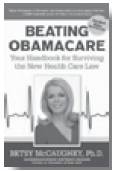
Despite the fact that 49% of Americans don't want Obamacare, it remains the law of the land. Most of the law's worst provisions take effect in January 2014, yet Americans still have only a faint idea of the radical changes they will soon face. Constitutional scholar and patient advocate Betsy McCaughey is a great help in bridging that knowledge gap, as she is one of the few people who has actually read the entire 2,572 pages of the law. She has distilled the inscrutable legalese down to practical, essential facts in a short, easy-to-read book. McCaughey does a great job explaining the impact the law will have on individuals and on healthcare nationally. Though young people will be compelled to buy health insurance they don't need, and many companies will have to pay fines, ultimately it is seniors who will bear the brunt of the new law. McCaughey explains that Obamacare cuts Medicare funding by more than half a trillion dollars over the next decade, just as baby boomers swell rolls by 30%. Doctors, hospitals, and nursing homes are already paid less than the actual cost of caring for Medicare patients, so these cuts will really hurt. Obama'â„¢s own chief actuary estimates that Obamacare cuts will lead 15% of hospitals to stop accepting Medicare, making it harder for seniors to find doctors who will treat them. Still more hospitals will cope by laying off nurses and otherwise limiting care. In short, seniors can expect less and lower quality healthcare under Obamacare. Even people who don't rely on Medicare, Medicaid, or government healthcare exchanges will not escape federal intrusion. "For the first time in history," writes McCaughey, "this law empowers the federal government to dictate how doctors treat privately insured patients" who pay their own premiums. It's all part of Obama's overarching plan to redistribute health care resources from seniors and workers who pay for their own health insurance to the uninsured. Because the tax hikes in the law pay less than half the cost of covering the uninsured, the difference comes from limiting care for people who already have insurance. That is why the government will now be the third party in the doctor's office, using computers to tell doctors what to do. Doctors and hospitals who insist on providing generous care will be financially penalized. If you read the book (and you should), don't skip the glossary; it contains many useful details not found in the main body. For example, seniors on Medicare will want to know about the "observation care" rule, which may mean less care and higher out-of-pocket costs if they go to the hospital, but are not formally admitted. (Regnery Publishing, 2013, 168 pp., $14.95) |
 On the individual level, patients and doctors will have to navigate a "minefield of new regulations, taxes, and government oversight." From a national perspective, far fewer Americans will access health insurance through their jobs. Instead, millions will move to Medicaid rolls or buy a taxpayer subsidized plan sold through state health-insurance exchanges.

