|
|
|
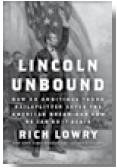
"I desire to see the time when education, and by its means, morality, sobriety, enterprise and industry, shall become more general than at present." These words of Abraham Lincoln's could be the lament of a modern-day conservative. Lincoln Unbound begins by telling Lincoln's story. The author ends by suggesting changes America can make to move forward with the vision Lincoln described, as alternatives to economic stratification, social decay, and shortcomings in education.
Lincoln grew up among Jacksonian Democrats, the party of everyman the subsistence farmers, the laborers. But Lincoln chose the Whig Party (later Republican) the party of banking, business, mining, and professionals. Having purposefully escaped his own humble beginnings, Lincoln wished to allow others the opportunity for upward mobility. He believed hard work and education were the cure for poverty. "Lincoln's critique of the Slave South is inseparable from his view of the free economy as the field of self-improvement." Lincoln wrote: "In all that people can individually do as well for themselves, government ought not to interfere." Lincoln would be perplexed by the modern welfare state. He wrote to a relative who wished to borrow money, "You are destitute because you have idled away all your time. Your thousand pretences for not getting along better are all nonsense they deceive no one but yourself. Go to work is the only cure for your case." Rich Lowry suggests that the Republican Party reclaim Lincoln from those who would characterize him as a proponent of big government, high taxation, and "progressive" social policy. Some "Lincolnian" measures the author recommends are: tariffs to fight unfair Chinese monetary and trade practices; advantages given to married and intact families; education reforms allowing parents to choose schools; and laws intended to diminish public union strength. In his eulogy of his hero, Henry Clay, Lincoln wrote: "He desired the prosperity of his countrymen partly because they were his countrymen, but chiefly to show to the world that freemen could be prosperous." We must work to halt economic and moral decline and reclaim the American dream as a model for the world. (Harper Collins, 2013, 271 pp., $26.99) |
 Contrary to those liberals who would claim the legacy of Lincoln for their own benefit (Mario Cuomo, Why Lincoln Matters), the Civil War President favored industrial and economic advancement, advocated property rights, and believed in the rule of law. He was a strong proponent of personal responsibility, hard work, and economic mobility.

