|
|
|
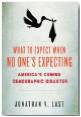
Back in 1968, Paul Ehrlich predicted the world would soon run out of food, oil, and water because people were having too many babies. He turned out to be spectacularly wrong on all counts, but political liberals still make doomsday predictions about overpopulation. Author Jonathan Last has a very different message: He says if America wants to continue to lead the world, we need more babies! A country needs a fertility rate of 2.1 to maintain its current population. There are many cultural forces behind our moribund fertility including the Pill, college, more women in the workforce, delayed marriage, delayed childbirth, and increased divorce rates. Social Security and Medicare have had a two-fold negative effect on fertility rates: First, couples no longer rely on children to care for them in their old age, so they aren't as motivated to go through the trouble of raising them. Second, even those who want more children find it increasingly difficult to afford them. These social welfare programs have placed an enormous new tax burden on young families, decreasing the earning power of young, white men by 40% (and by 60% for black men) since the 1970s. If current trends continue, by 2050 all of America will look like Florida, the state known as "God's waiting room" because of its disproportionate elderly population. The implications are disconcerting. An aging population combined with low birthrates equals a contracting labor force, less entrepreneurship and innovation, and a shrinking capital pool as Baby Boomers transition from asset accumulation to retirement drawdown. Even more troubling is a dwindling tax base coupled with massive increases in government payouts. By 2034, there will be just 2.1 workers to support each retiree's Social Security payments. Those same two workers will also be expected to shoulder around $17,000 in Medicare costs per retiree. It'â„¢s not hard to picture intergenerational conflict and a total breakdown of the welfare state. Americans aren't the only ones facing a demographic crisis: 97% of the world's population lives in a country whose fertility is declining, with all first-world countries standing below the 2.1 replacement rate. Last takes us on a tour of the measures Japan and other nations have taken in recent decades to increase their birthrates, and ultimately concludes that people can't be bribed to have children they don't want. Governments can, however, remove roadblocks for those who do want children, and Last offers some modest proposals. (Encounter Books, 2013, 230 pp., $24) |
 The U.S. fertility rate now stands at 1.93, but that is only because our large Hispanic immigrant population has an average of 2.35 babies. (But Hispanics revert to the national mean within a generation or two, so they won't prop up our national birthrate for long.)

