|
|
|
What embattled field commander has not wished to summon a host of ghostly soldiers from the wind to aid him in time of need?
Much of the idea came from Douglas Fairbanks Jr., a Brit who enlisted in the U.S. Naval Intelligence division and then lobbied the American Joint Chiefs of Staff to adopt British methods of trickery and deception. The son of silent film action hero Douglas Fairbanks, he proved to be a swashbuckler every bit as daring as those portrayed by his father in the movies. Winner of a Silver Star, he showed incredible courage by capturing a heavily garrisoned island in the Mediterranean aided by only four other men. The extraordinary group was composed of artists, illustrators, advertising layout men, actors, sound experts and photographers - definitely not typical soldiers. The creativity, energy, and imagination they brought to the task is what made them so effective. Some, like Bill Blass, went on to become fashion designers after the war; others went into radio, television, or the film industry. Indeed, as one of their commanders said, "We were Cecil B. DeMille warriors." Their exploits included using carefully deployed loudspeakers to simulate heavy equipment, and inflating rubber tanks and trucks which were then camouflaged to be barely visible to German spies. Scripted radio traffic, encoded just cleverly enough to be breakable (but not too breakable!) by the Germans, gave out false information on troop and armor movements. If an operator suspected that he was being monitored by the enemy, he might adopt the Morse code "signature" of an operator known to the Germans to be in a different outfit, just to sow more confusion. Select group members impersonated generals and wore arm patches from other divisions, all to deceive informers and spies as to the actual whereabouts and intentions of Allied army groups. "Drunken" soldiers dispensed false information to civilian spies in local pubs. Like jujitsu masters, the team used the very strengths of the Germans to outwit them. Since the Germans were so effective at gathering intelligence, it was in a way easier to fool them because there were so many opportunities to plant misleading information. The work wasn't done in the safety of the rear. Often its real purpose was to draw enemy fire to ersatz positions so that the merry band of tricksters became the target of the bamboozled Germans. Despite the danger that these artists incurred, their casualty rate was astonishingly low. In the end, this quietest of brigades simply disbanded and faded away in a mist of secrecy, just as it had done countless times on the battlefield. Its legacy was tens of thousands of lives saved and a quicker end to the war. (E.P. Dutton 2002, 338 pps., $25.95) |
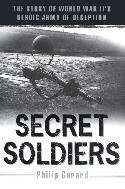 During World War II, the Allies were able to call upon such legions, conjured up by master magicians who dabbled in the dark arts of sonic and visual deception. The brilliance of these virtuosi - the "23rd Headquarters Special Troops" - was a vital factor in the Allies' march from Normandy to Berlin.

