|
|
|
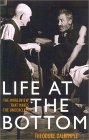
Many writers have described the plight of the poor who live on society’s bottom rung. But few have climbed down beyond simple material scarcity to the world of psychic desolation inhabited by the underclass. Theodore Dalrymple, a doctor practicing in London’s slums for the last 20 years, made the journey, and he details his experiences in this fascinating and horrifying collection of essays. Multiculturalists and moral relativists beware: Dalrymple has spent too much time in this wasteland to accept fashionable theories about the liberating effects of free love, free drugs, and the absence of acceptable rules of behavior. Dalrymple describes the direct results of "enlightened" social policies propounded by elite academics and their followers who set governmental policy. The quality of education has collapsed, creating a vacuum to be filled by a corrosive popular culture. True self-esteem has been sapped by a nanny state that keeps body but not soul together. Public housing grows more violent, while the police become ever more tolerant of the criminal activity they have come to see as inevitable. Meanwhile, an ever-expanding class of criminologists and social theorists spin opaque theories of victimology to justify it all. The epidemic is truly multicultural. British natives, blacks, Indians, and Muslims all have been infected, and the cancer is spreading into the middle classes. One need only witness the shocking behavior of formerly reserved British fans at soccer championships in Rome, where shouted obscenities and street violence are now the once-proper Englishman’s calling cards. The lifestyle of much of the upper class offers little hope of help. While the typical aristocrat can easily recover from a weekend binge, the underclass denizen who apes his behavior suffers generations of misery. This is not a book for the faint-hearted. Dalrymple has real fear for the survival of England as a civilized nation. Memo to America: social policies propounded by academics and elites are bad for our national health. (Ivan R. Dee Inc., 2001, 263 pps., $27.50) |
 The cast of characters he encountered in this dark and seamy carnival is unforgettable: tattooed skinheads with their malignant glares; terrified young Indian women returned by the authorities to murderous husbands; foreign doctors with their altruistic illusions shattered under obscene abuse from their welfare-state wards. In merrie England, attempted suicide is the most common cause of emergency-room admission for women.

