|
|
|
The Compleated Autobiography, which picks up where Benjamin Franklin's famous Autobiography left off, is unlike any other biography on the market. Mark Skousen has attempted to chronicle Franklin's life from 1757 to his death in 1790 in the Founding Father's The first section describes Franklin's experience as ambassador to England. Although he deplored war and tried to help the British and Americans resolve their differences, the arrogance with which the British government treated the colonists' grievances eventually convinced Franklin that America must become independent. He went home and was chosen as a delegate for the First Continental Congress, where he assisted the other Founders in writing the Declaration of Independence and the Articles of Confederation. He then became ambassador to France. So important was his role in convincing the French to provide financial and military assistance that America could not have won the war without him, or at least not so quickly. Franklin spent his final years at his home in Pennsylvania, much occupied with writing his autobiography and maintaining a keen interest in politics and the sciences, and he became an increasingly enthusiastic champion of abolition and religious freedom. He died in 1788 and was honored only in Pennsylvania and France, but Americans came in time to perceive him as one of the most important of the Founding Fathers. Although The Compleated Autobiography, compared to the original Autobiography, concentrates largely on his political doings, it imitates its predecessor in its depiction of Franklin's personal life, interspersed with his observations on mathematics, the sciences, religion, morality, economics, health, and society. Politically and socially, he was a conservative who constantly extolled the qualities of hard work and frugality. He believed firmly in the importance of virtue to effective government, writing: "Only a virtuous people are capable of freedom. As nations become corrupt and vicious, they have more need of masters. America is too enlightened to be enslaved." Franklin's distinctive style and the breadth of his interests are given full justice. Skousen writes that he wanted to "create a work entirely in the hand and voice of Franklin," and the finished work seems authentic, filled as it is with sparkling humor, intelligence, and patriotism. Those who find the typical biography dull are in for a very pleasant surprise. (Regnery Publishing, Inc., 2006, $27.95) |
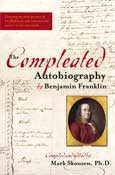 own words by imitating his writing style and culling extensive information from his letters, legal documents, and other papers. The book provides a rich, full-blooded portrait of one of the most colorful and influential personalities of the Revolutionary era. It highlights Franklin's role as ambassador to Britain and France before and during the war, as well as the part he played in the Constitutional Convention. In short, the last thirty years of Franklin's life, in which he accomplished his most important tasks, here receive the attention they deserve.

