|
|
|
Laurent Murawiec has many radical ideas to break the grip of the Saudis over the huge amounts of oil that underlie their "sacred sands": Invade the Arabian peninsula, put an international consortium in charge of disbursing the oil in a way that will fairly benefit the average Arab, They won't seem crazy after you read this book. As Murawiec shows, Saudi Arabia is truly an evil realm ruled by princes of darkness. The official religion is Wahhabi Islam, a radical creed that preaches death and destruction for non-believers. This virus has been nurtured and exported by the Saudis, whose financial support of radical religious madrassas (schools) has spread infection all over the world. Saudi Arabia was the major force behind the radicalization of Muslims in Pakistan, and adherents of Wahhabism quickly infiltrated the ISI - the Pakistani secret police force that still plays a double game with its U.S. "ally" today. And Pakistan was the breeding ground for the Taliban before it gained power in Afghanistan. Saudi money, almost unlimited due to the rapid increase in the price of oil, has flowed like a river of venom all over the world. No nation is free from its corrupting influence. Saudi arrogance is legendary: when a Saudi prince flies to Washington in his private jet, his pilots refuse to talk to American air traffic controllers if they happen to be women. Saudi Arabia is not even a country in the modern sense Its ruling elite consists of twenty to thirty thousand descendants of the House of Saud, who reap the vast majority of the benefit of the treasure beneath the sand. These rulers don't particularly care about the commoners: illiteracy and repression of free speech are rampant. The Saudis rule a demoralized people and are a major supporter of international terrorism. Murawiec persuasively argues that the ruling Saudis reached a truce with Osama bin Laden, allowing him to concentrate on targets outside Saudi Arabia, while they consolidated their power at home and continued funding terrorism abroad. Oil has not proved to be an unalloyed boon to Saudi Arabia. There is an historically ingrained disdain for work and innovation dating back to the days of the Bedouin bandits and, after all, the despised foreigner may be purchased to do the heavy lifting. The studying that does occur in schools is usually seventh-century "religious" indoctrination. Modern economies do not spring from such arid soil. The author persuasively argues that the Saudis have no real right to the great resources which they have used for such nefarious ends. They were a convenient party to hand control of the sandy wasteland to when the great powers retreated after the Second World War, and they cleverly consolidated control of the peninsula. Someday, perhaps sooner than we expect, the oil will run out. Until then, we must deal with the pirates of the sand who live in luxury and dream of our destruction. (Rowman and Littlefield, 2005, 268 pp, $25.95) |
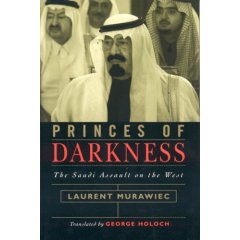 freeze Arab assets in the U.S., and set up a new government in Saudi Arabia. Even to a person familiar with the unsavory Saudis, these ideas may seem crazy.

