|
|
|
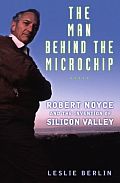
The modern industry of semiconductor electronics was the creation of a large number of brilliant innovators, but if one man stood preeminent, it was Robert Noyce. This outstanding new biography tells the story of an American original and his times. The son of a Congregationalist minister who spent much of his childhood moving about rural Iowa with his family, He didn't find math and science at little Grinnell College in Iowa very demanding, so he graduated to the big leagues at MIT. That proved to be a challenge, but Noyce quickly adjusted. Soon his awestruck fellow students began referring to him as "Rapid Robert" for his astoundingly quick mind. After receiving his Ph.D. in the nascent field of semiconductor physics, Noyce worked with the legendary William Shockley and other pioneers before co-founding Intel. That little company exploded in the 1970s and made Noyce a extremely wealthy man, as well as a sort of oracle to the entire industry. He was co-inventor of the first practical integrated circuit, arguably as important an invention as any in history. The entire electronics and computer industry is built upon it, and The Man Behind the Microchip does an outstanding job of explaining the intricacies of mass-producing this world-changing device. Noyce began his career as a pure scientist, but events drew him ever deeper into the business end of the field. Here was the rare case of a man who combined true technical brilliance with unusual business acumen. He was an innovative businessman, helping to create the venture capital industry as we know it today, as well as developing the use of stock options for compensation. Noyce pioneered the outsourcing of chip manufacturing to Japan and later led the American industry's battle against the Japanese for free trade and protection of intellectual property. Always suspicious of big government, he avoided federal money, which he thought induced laziness, and fought industrial policy initiatives, preferring to let the free market allocate capital where it was needed. A man of immense charisma, Noyce proved himself to be a demanding but inspiring boss, a generous mentor to young upstarts like Steve Jobs of Apple Computer, and a visionary. The author recounts a story of Noyce in the 1970s describing a future of tiny computers, cell phones and instantaneous communication that his audience found ridiculous. But here we are, living in that future. The term "Renaissance man" is overused, but it probably is not robust enough to capture the essence of a man who flew his own jet, organized his own madrigal choir, did Nobel-level science work, and founded and ran several huge businesses. (Oxford University Press, 2005, 307 pp., $30) |
 Noyce was a high-spirited, rambunctious boy who loved model airplanes, fast cars, pretty girls, and extremely demanding mathematics and science courses.

