|
|
|
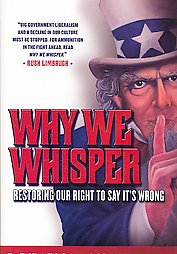
The most important reasons for the decline of morality in America are the imposition of secularism and the promotion of destructive behavior by the government. Americans with traditional values who want to fight for their beliefs face a hostile culture, and many are afraid to publicly express their views. If we want to make our country a better place, we need to do two things according to Jim DeMint and J. David Woodard. First, we must take a good hard look at which government policies have good results and which don’t, and second, we need to be able to argue for change. Why We Whisper provides a welcome analysis of the problems besetting our society and suggests concrete means of bettering it. The authors describe how secularists began to gain power in the 1950s by manipulating public opinion through the media and academia and by denigrating traditional values in the arts. In our litigious society it is easy for the ACLU and similar legal organizations to intimidate groups that hold traditional values. The Boy Scouts have become a favorite target because they mention God in their Scout oath and refuse to hire homosexuals. As a result, fewer and fewer public schools are willing to sponsor them. Religious organizations are having an increasingly difficult time enforcing standards of morality among their employees. The sexual revolution has caused great damage and, unfortunately, the government has promoted irresponsible behavior for several decades by its devaluation of marriage and its promotion of birth control rather than abstinence. While we may not be able to convince others of the importance of sexual morality on religious grounds, we can point to the numerous ways that promiscuity has weakened our country. All evidence shows that children benefit from marriage and that STDs are primarily spread through fornication. Americans spend billions of dollars in taxes every year to treat diseases and fight rising crime. It would be much more useful to promote healthy behavior to begin with. The government should not insulate individuals who behave irresponsibly from the consequences of their actions. Most importantly, churches should have an equal right to participate in public activities to defend morality. (Rowman & Littlefield Publishers, Inc., 2008, 256 pps, $24.95) |
 In the 1960s they started to use the courts against religion. In too many cases, the government tries to prevent the free exercise of religion. The authors argue, controversially but also convincingly, that the Constitution doesn’t give Congress or the IRS any power to tax churches. Today, any church that supports a particular candidate faces the threat of taxation.

