|
|
|
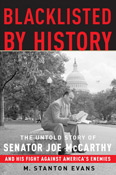
Joe McCarthy is one of the most vilified names in American history. It conjures up images of slander, deceit, and innocent lives ruined. Yet the records of the time tell another story. It’s time to revise the history books, says Stanton Evans. His exhaustively researched tome on McCarthy’s activities reveals a good man who was determined to remove Communists from the U.S. government, and who was right about all the people he accused. Blacklisted by History provides a welcome antidote to the false impression most people have of the Cold War in the ’50s. One of the greatest difficulties in researching this part of American history is the disappearance of many primary documents. This loss has created, Evans says, Evans begins with an overview of U.S. Communist activity in the ’30s and ’40s. The Reds gained an astonishing foothold in government policies and constantly fed the media and their bosses Soviet and Chinese Communist propaganda. Many of McCarthy’s charges had already been made by others by the time he emerged as the leading Cold Warrior. John Service, Alger Hiss, J. Robert Oppenheimer, and numerous others had been identified as possible spies by 1946, indicating a vast network of cooperating activity rather than a few isolated cases. This oft-forgotten fact led to accusations that McCarthy was merely reviving "stale, warmed-over charges" and also destroying innocent peoples’ reputations. Actually, McCarthy refused to name the government agents he was accusing before establishing a Senate committee of investigation. It was his enemies who demanded names, claiming that otherwise they couldn’t be sure he wasn’t making up characters. Perhaps the most important but most overlooked element of McCarthy’s attack on Communism is that he wasn’t trying to indict all Communists; he just believed that Communist agents had no place in government. Not one of his suspects was innocent. In the end, after myriad attempts by his enemies in Congress to condemn his actions, the only charge that survived out of 46 was lacking proper deference toward the committees trying to destroy him. McCarthy’s demise came quickly, but after he had exposed many espionage agents. "When the final chapter in the conflict with Moscow was written…he was not without his triumph." (Crown Forum, 2007, 663 pps, $29.95) |
 "a kind of black hole of anti-knowledge in which…curious fables circulate without resistance." Some of these stories are pure fabrications, while others did occur but have been exaggerated out of context. Fortunately, many formerly secret records have now been made available to the public and certain long-lost documents have resurfaced, such as the Venona files and FBI records, making it essential to reassess history's verdict on McCarthy.

