|
|
|
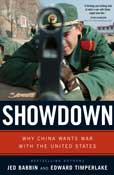
If a nuclear Iran or global warming isn't enough to keep you awake at night, here's another reason: war with China. If it sounds farfetched, the authors of this thought-provoking book will make you think again. Both have extensive knowledge of U.S.-Chinese relations and a keen understanding of the Chinese strategic worldview. Their blunt assessment: a shooting war with China is more likely than not in less than 10 years. Consider the recent buildup in Chinese military strength. China spends a larger percentage of its GDP on its military than does the United States. It isn't just the direct military buildup that scares the authors. China is meddling in Latin America, Iran and Africa - anywhere precious natural resources can be locked up. China's enormous currency reserves, largely garnered from cheap exports shipped around the world, give it the financial clout to buy whatever it wants. U.S. corporations and the average American are famous for being obsessed with the near term. The Chinese do not suffer from that shortcoming. Their culture encourages the long view, and their military and strategic planners take this approach. The fiery rhetoric from some of their chief military spokesmen is an additional cause for worry. The Chinese are also driven by demographics. Due to the one-child policy and the fact that boys are preferred to girls, there are about 23 million more young men than women in the country. The military is a safety valve for this potentially explosive energy. China is on a collision course with the United States in the Pacific. It recently fielded nuclear submarines with the capability of hitting the U.S. mainland. Its aggressive espionage program, highlighted in a Congressional report spearheaded by Rep. Chris Cox (R-Calif.), supplies it with the technology it can't buy or create itself. Although the authors are pessimistic, they are not defeatists. China faces formidable challenges in keeping its enormous population in line and spreading the wealth enough to avoid social unrest. Its government has been successful in using strong-armed repression tactics to build the economy but, in a wired world, such controls are difficult to maintain. Besides solid reporting on what is happening now with China, the authors present several chilling scenarios describing how war with China might come about. A common flashpoint is long-coveted Taiwan, which would present the U.S. with formidible logistical challenges. Napoleon advised letting the giant sleep. For better, or more likely for worse, the giant is now very much awake. (Regnery 2006, 208 pp, $27.95) |
 In fact, it spends more than all nations except the U.S. and Russia. And China is targeting its expenditures in areas that could inflict maximum damage on the United States, like anti-satellite lasers and cyberspace attack weapons.

