|
|
|
Anyone with an interest in the history of business and finance in late 19th and early 20th century America will enjoy this authoritatve, massive new biography of Andrew Mellon. Mellon’s father was a lawyer, judge and successful investor and financial entrepreneur in Pittsburgh. Andrew, his fourth son, was a far greater success. He built on the foundation left by his father to become one of the wealthiest and most powerful men in America. While not on a level with Rockefeller or Carnegie, Mellon assembled an empire in real estate, The author paints a vivid picture of Mellon’s hometown, Pittsburgh, which was described by a writer in the 1890s as "hell with the lid off" due to its vast industrial works and filthy air. Indeed, Mellon’s English wife, upon seeing it from a distance, gasped, "You don’t mean to say you actually live here?" Mellon became Secretary of the Treasury under President Warren Harding, but he really came into his own under Calvin Coolidge. Though not a gregarious man or good public speaker, he did prove to be a canny political player who was able to push through a supply-side regime of tax cuts in the mid 1920s. Although other factors contributed to that decade’s fabulous prosperity, Mellon’s policies undoubtedly helped. Mellon continued to serve under Herbert Hoover, and shared the blame with him for the ravages of the Depression. Neither he nor anyone else, including Roosevelt, had any idea how to tame the most formidable economic crisis in our nation’s history. The Roosevelt administration wasted no time in savaging Mellon; after all, he was one of the hated "economic royalists" whom Roosevelt had enjoyed pillorying during the campaign. First, Mellon’s tax returns were audited. No irregularities were found. Then, the Treasury, at FDR’s direction, unsuccessfully sought an indictment for tax evasion. Roosevelt kept coming. Next was a civil suit by the Treasury for allegedly massive underpayments of taxes. There is ample evidence that Roosevelt was heavily involved in all this and in venting personal political animus, as well as wanting to humiliate a prominent Republican. After a long, public trial, during which Mellon displayed great courage and forbearance, he was completely absolved and acquitted. But not before he had died. During the trial, and before the verdict, Mellon went to see Roosevelt to get his support for a national art gallery to which Mellon donated a large portion of his vast art collection. Many of the pictures had been bought from the Soviet Union’s collection at the Hermitage, and Stalin used the proceeds to help offset the ravages of his disastrous economic policies. Mellon’s legacy of art and supply-side economics make him a very important figure in American history. (Alfred A. Knopf, 2006, 621 pp, $35) |
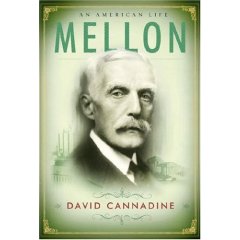 manufacturing (Alcoa Aluminum) and petroleum (Gulf Oil). His skill was the shrewd analysis of businesses from the outside, timely investments in them, and patience in letting them grow.

